Americans reported losing more than $12.5 billion to fraud in 2024, a 25 percent jump over the year before, according to the FTC's Consumer Sentinel Network Data Book 2024, released March 2025. A chunk of that money walked out the door through a single, seductive promise: "guaranteed approval." If you have poor or thin credit, have been turned down before, and are now getting texts swearing you are approved, I want to arm you before you reply to a single one of them.
The good news is that the warning signs are consistent, and once you know what a legitimate lender is legally required to do, the scam version gives itself away almost instantly. Let me walk you through the red flags, pair each with the rule a real lender follows, and show you how to verify any offer in about five minutes.
Why "guaranteed approval" is the biggest tell of all
No legitimate lender guarantees a loan before you apply. That is not me being cautious; it is how lending works. A real lender checks your credit report, verifies the information on your application, and then decides. Until they have looked at you, they cannot honestly promise anything.
So when an offer leads with "guaranteed approval" or "approved no matter your credit," especially right after you have been denied elsewhere, treat it as a red flag, not a lucky break. The promise is the product, and the product is bait. The desperation that makes the promise feel like a rescue is exactly the vulnerability the scammer is counting on. Our piece on what "all credit types considered" really means explains how honest lenders evaluate thin or bruised credit instead of guaranteeing it.
The upfront-fee trap, and why it is actually illegal
Here is the one I most want to stick with you. Under federal rules, it is illegal for a company to ask you to pay, or to promise to pay, before it gives you a loan or credit if the company guarantees or strongly implies you will get it. That "processing fee," "insurance fee," or "paperwork fee" demanded before any money reaches you is not a normal cost of doing business. It is the scam itself.
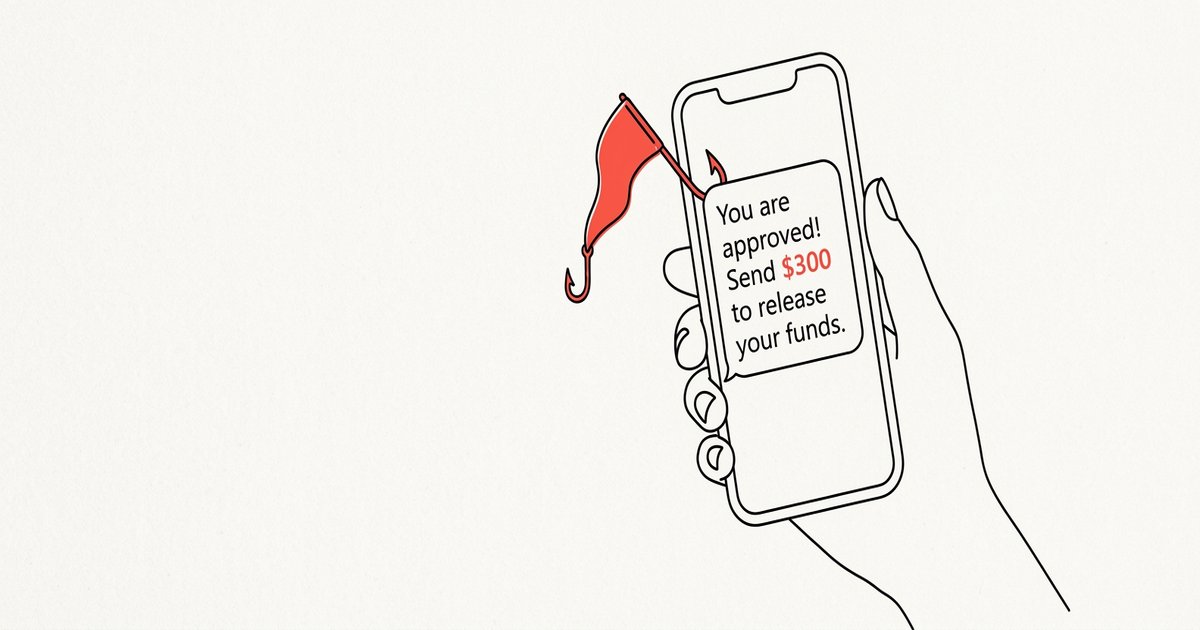
The pattern is always the same: you are approved, the funds are ready, you just need to send a few hundred dollars first to "release" the loan. You send it, and either the loan never appears or a new fee does. Walk away from any guaranteed offer that wants money up front.
Now an important clarification so I do not scare you off real options. Legitimate, licensed lenders do sometimes charge disclosed application, origination, or appraisal fees. The difference is twofold: a real lender discloses those fees in writing as part of the loan terms, and it does not condition a guarantee of approval on paying them first. A known, licensed lender disclosing an origination fee in your loan agreement is lawful. A stranger texting "guaranteed approval, send $300 to release your funds" is not.
The unsolicited "you're approved" text
If you get a text or call saying your loan is approved and you never applied, treat it as a scam until proven otherwise. You cannot be approved for something you did not apply for.
The move here is simple: do not reply, do not click the link, and do not call the number in the message. If you are curious whether you have a real relationship with a company they are claiming to be, look up that company independently and contact it through its official website or a number you find yourself, never the one in the text.
Pressure, urgency, and weird payment demands
Scammers manufacture urgency because urgency shuts down judgment. "This offer expires in an hour." "We need the fee in the next 20 minutes or you lose your spot." A legitimate lender wants you to read the terms; a scammer wants you to act before you think.
Pay special attention to how they want to be paid. Requests to pay a fee by gift card, wire transfer, cryptocurrency, or a peer-to-peer payment app are hallmark scam behavior. These methods are fast, hard to trace, and nearly impossible to claw back, which is precisely why fraudsters love them. No legitimate lender collects a loan fee in gift cards.
What a legitimate lender does instead
Knowing the legal baseline makes the fakes obvious. A real, licensed lender will:
- Check your credit and verify your application before approving anything, rather than promising approval sight unseen.
- Disclose the APR, finance charges, and total cost in writing before you are bound, as required by the Truth in Lending Act and its Regulation Z. If you cannot get a clear APR and full terms before signing, that is a serious warning sign.
- Be licensed in your state and have a real, verifiable physical address and business registration.
- Use its own clear name, not a vague or copycat name designed to mimic a well-known brand.
How to verify a lender in five minutes
Before you hand over any information or money, do a quick check. It does not take long, and it is the cheapest insurance you will ever buy:
- Check the state license. Look up the lender with your state attorney general's office or your state banking or financial regulator to confirm it is licensed to lend in your state.
- Search the CFPB complaint database to see what other consumers have reported.
- Confirm the basics: a real physical address, a working customer-service line you found independently, and clearly disclosed terms including the APR.
One honest note about the difference between a scam and a bad-but-legal loan, because the word "scam" gets stretched. A scam means no loan exists; it is pure theft. A predatory loan is real money on abusive terms, like a payday loan with a triple-digit APR. Both deserve caution, but they are not the same thing, and a high-cost loan that fully and legally discloses its terms is not a "scam" even if it is a poor deal. Knowing your APR up front is how you tell a costly-but-legal option from outright fraud, which is the same lesson behind comparing loans by APR.
If you have already been scammed
If you sent money or shared information, act fast and do not waste energy on shame; these operations are sophisticated and target millions. Report the fraud through the government's where-to-report-a-scam tool and file a complaint with the CFPB. If you shared bank or card details, contact your bank immediately to stop or reverse payments, and consider placing a fraud alert or credit freeze with the credit bureaus to block new accounts in your name.
The $12.5 billion reality: you are the target, not the exception
That $12.5 billion in 2024 fraud losses, across millions of consumer reports captured in the FTC's Consumer Sentinel data, is not a story about gullible people. It is a story about well-run operations that aim straight at people who are stretched and hopeful, which describes most of us at one time or another. Falling for one would not make you foolish; it would make you human and targeted. The government's scams and fraud hub keeps current guidance on the latest tactics.
The safest path when you actually need to borrow is to compare real, disclosed options rather than chase whatever promise lands in your inbox. You can start a request to see what is available, and our guide to borrowing safely in an emergency goes deeper on the questions to ask. Let me be straight about my own side of this, because honest language is the whole point of the article: American Cash Relief is a lender-matching service, not a lender, and checking your options here is not a guarantee of approval. No one can promise you that, and anyone who does is the red flag this article is about.
Frequently Asked Questions
Are "guaranteed approval" loans a scam?
A guarantee of approval before you apply is a major red flag, because no legitimate lender can honestly promise a loan without first checking your credit and verifying your application. The phrase is especially suspect when it comes from an unsolicited text or follows other denials. Real lenders evaluate, then decide; they do not guarantee.
Is it legal for a lender to charge a fee before giving me a loan?
Under federal rules, it is illegal for a company to demand payment up front if it guarantees or strongly implies you will get the loan. That is the classic advance-fee scam. Legitimate, licensed lenders can charge disclosed application or origination fees, but they disclose them in writing as part of the loan terms and do not tie a guarantee of approval to paying first.
I got a text saying my loan is approved, but I never applied. Is it real?
Treat it as a scam. You cannot be approved for a loan you never applied for. Do not reply, do not click the link, and do not call the number in the message. If you want to verify, contact the company independently through a number or website you find yourself.
How do I check whether a lender is legitimate?
Verify the lender's license with your state attorney general or banking regulator, search the CFPB complaint database, and confirm it has a real physical address and discloses the APR and full terms in writing before you sign, as the Truth in Lending Act requires. If any of those are missing, walk away.
What should I do if I already paid a scammer?
Act quickly. Report it through the government's scam-reporting tool and to the CFPB, contact your bank to stop or reverse the payment, and consider a fraud alert or credit freeze with the credit bureaus to prevent new accounts being opened in your name.

Need cash before payday?
Pick your amount and get matched with lenders in our network. It's free, secure, and there's no obligation.