
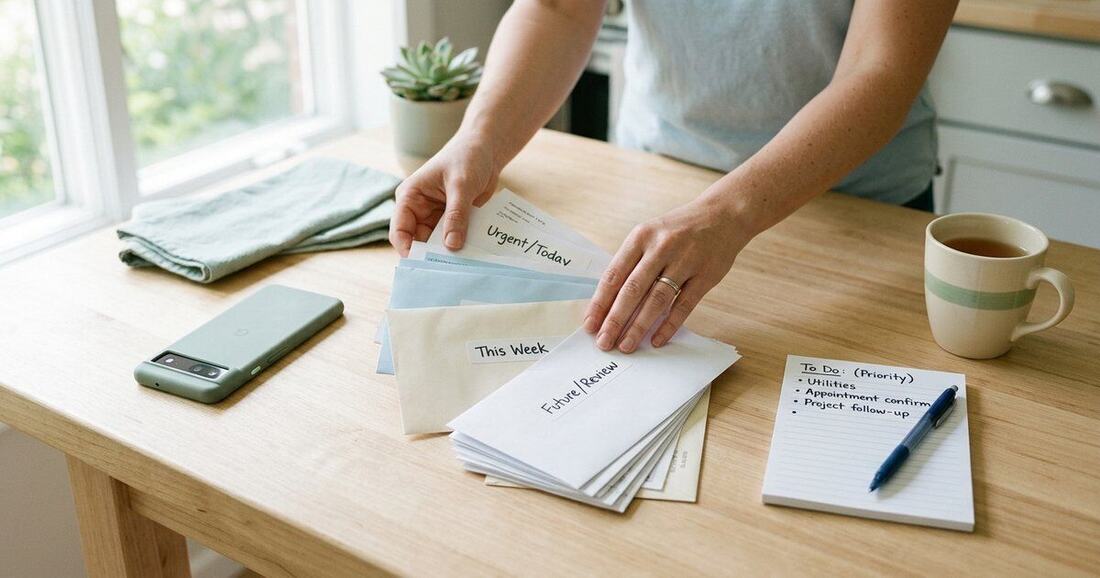
You have more bills due than money to cover them, and your chest feels tight just looking at the pile. First, breathe. You have more options than it feels like right now, and the worst thing you can do, doing nothing because you're overwhelmed, is the one thing this plan will keep you from doing.
You're also far from alone in this. Federal Reserve data has found that a large share of U.S. adults could not fully cover a $400 emergency with cash, and a smaller group couldn't cover it by any means. Our piece on covering a $400 emergency breaks down exactly what that means. This is a common, survivable situation, and there's an order of operations that works. Let's walk it together.
Step 1: List every bill and what happens if it's late
Write down every bill due, the amount, and the real consequence of paying it late. Not the vague dread, the actual outcome. This is the step that turns a panic into a plan, because not all "late" is equal, and you need to see that on paper.
Next to each bill, note what late actually means:
- Rent or mortgage: late fees now, and eventually eviction or foreclosure if it drags. Slow to start, severe at the end.
- Electric, gas, water: shutoff after a notice period, which is dangerous if you rely on heat, cooling, or medical equipment.
- Car loan: repossession if you fall far enough behind, and you may need that car to earn.
- Credit card or personal loan: late fee, a hit to your credit, and a higher rate, but no one takes your home or your power over one late payment.
Seeing it laid out tells you something important: an unsecured credit card late payment, while not great, is far less urgent than a utility shutoff. That clarity is what lets you make a calm decision instead of paying whichever bill yells loudest.
Step 2: Rank them, which bills come first and why
Pay first the bills whose non-payment causes the worst, fastest harm, then work down to the ones with more room to negotiate.
As a general order, top to bottom:
- Housing, the roof over your head.
- Utilities you need for safety, heat, water, power, especially with kids, illness, or extreme weather.
- Food and medications.
- Transportation to work, the thing that keeps income flowing.
- Insurance you legally or practically need.
- Unsecured debts like credit cards, which usually have the most negotiation room.
This is general guidance, not a one-size answer. Your situation might reorder it, a car you can't lose because it's your livelihood, a medication you can't skip. The point is to pay by consequence, not by whichever envelope is reddest.
Step 3: Call before you miss, not after
Call the biller before the due date, not after you've already missed it. A heads-up gives you options; a missed payment they had to chase gives you fewer. I know calling feels scary. You're not asking for a favor you don't deserve, you're a customer working out a plan, and these companies field these calls every single day.
You don't need a perfect speech. Keep it short and honest. Here's the shape of it, no matter who you're calling:
"Hi, I want to stay current but I'm short this month. I can pay [amount] by [date]. What options do you have, a payment plan, an extension, or hardship help?"
A few specifics:
- Landlord: ask for a few extra days or a partial payment now with the rest by a set date. Get any agreement in writing, even a text.
- Utility: ask about a payment arrangement, budget billing, and any shutoff protection or hardship program. Many have them.
- Credit card issuer: ask about hardship programs, a lower rate, or a temporary reduced payment. The CFPB confirms issuers often have options for cardholders who can't pay (CFPB).
- Lender: ask whether you can defer a payment or move the due date.
One honest note: a call doesn't guarantee a yes. But asking costs nothing, and "no" leaves you exactly where you already were. Most of the time, you'll get something.
Step 4: Tap free help, it's real and it's out there
Before you borrow a dollar, use the free help that exists for this exact moment. These are legitimate, no-strings resources, not sales pitches.
- Dial 211. It connects you to a local specialist who can point you to rent, utility, food, and bill-assistance programs in your community.
- Utility and bill help. The government's guide to help with bills points you to energy assistance (LIHEAP) and other programs. The National Energy Assistance Referral hotline is (866) 674-6327.
- Nonprofit credit counseling. A reputable, nonprofit credit counselor can review your budget, often for free, and call your creditors with you to build a real plan. The CFPB explains how these differ from for-profit debt-settlement companies, which you should approach with far more caution.
Step 5: If you must borrow, borrow safely
If you've worked through the steps above and still come up short, borrowing might be the answer, but go cheapest-first and walk past the traps. When households are asked how they'd cover a surprise expense, the cheaper routes (borrowing from family, a bank loan or line of credit) tend to show up more often than payday loans and overdraft, and that's the right instinct.
Before you sign anything, our checklist on how to borrow money safely in an emergency walks you through the cheapest-to-most-expensive order and the exact questions to ask. The short version: a credit union or installment loan almost always beats a single-payment payday loan. If borrowing is the route, you can see what loan options may be available with no obligation.
What to avoid
Three traps to refuse outright, especially when you're stressed and someone's promising a fast fix:
- Upfront-fee "debt relief" and "guaranteed" fixes. Legitimate help doesn't demand a fee before it does anything. Free nonprofit counseling exists, use it first.
- A new payday loan to cover this month. It can feel like relief and turn into a cycle that's harder to escape than the original bill.
- Ignoring the bill and hoping. Silence is the one move that removes your options. A phone call keeps them open.
After the crisis: a tiny buffer so next month is calmer
Once you're through this, the goal is to make sure a $400 surprise doesn't put you right back here. Even a small emergency fund changes everything about how the next hard month feels. And a flexible 50/30/20 budget built around your real income gives the chaos somewhere to land. You don't have to fix the whole picture today. Today, you just have to get through this month, and now you've got the order to do it.
Frequently Asked Questions
I have $300 and $900 in bills due. What do I pay first?
Pay by consequence. Cover the bills whose non-payment causes the worst, fastest harm first, generally housing, then utilities you need for safety, then food and medications, then transportation to work. Unsecured debts like credit cards come last because they usually have the most negotiation room.
What do I say when I call my landlord or utility company?
Keep it short and honest: that you want to stay current, that you're short this month, what you can pay and by when, and ask what options they have, a payment plan, an extension, or hardship help. Get any agreement in writing. Calling before you miss the payment gives you more room than calling after.
Will I lose my apartment if I'm late on rent this month?
A single late payment usually triggers a late fee, not immediate eviction, which is a longer legal process. Still, contact your landlord right away to arrange a partial payment or short extension, and call 211 to find local rent-assistance programs.
Where can I get free help paying bills?
Dial 211 for local rent, utility, and food assistance; call the LIHEAP hotline at (866) 674-6327 for energy bills; and contact a nonprofit credit counselor, whose first session is typically free.
Should I take a payday loan to cover my bills this month?
Treat it as a last resort, not a first move. Exhaust free assistance, payment plans, and cheaper borrowing first. A single-payment payday loan can start a cycle that's harder to escape than the original bill. If you must borrow, go cheapest-first and check the safe-borrowing steps before signing.

Need cash before payday?
Pick your amount and get matched with lenders in our network. It's free, secure, and there's no obligation.